Inside the platform
The half that most website projects discover six weeks in
Real screens from the operator app — the place your team actually lives. Not mockups, and not a feature list.
Almost every website quote covers the public pages. Then the business starts using it and needs the other thing: somewhere to see customers, take a payment, schedule the work, chase the invoice, and know whether any of it made money.
That part exists here on day one. This is what it looks like.
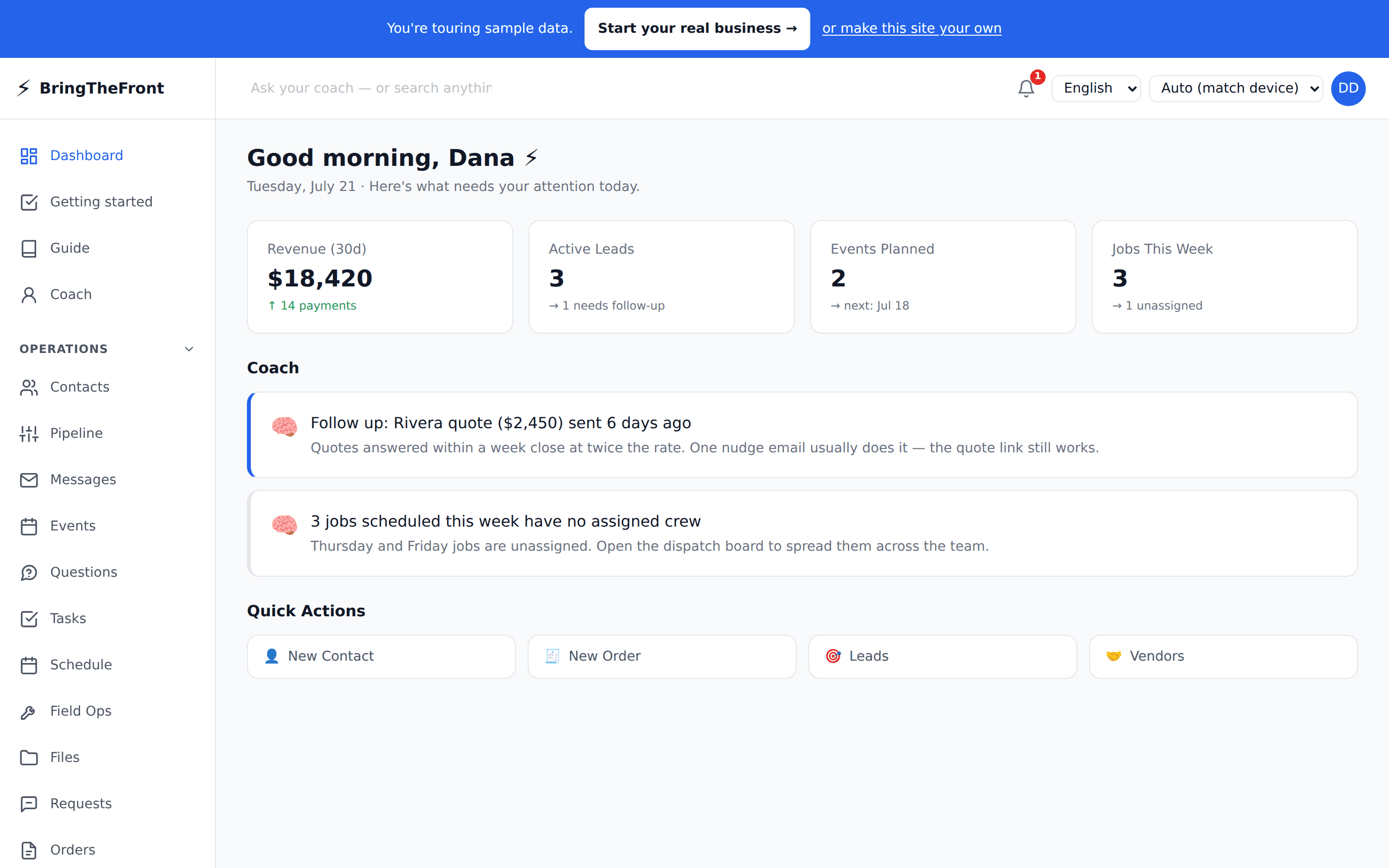
The morning dashboard
What needs a human today, in one screen — instead of four tabs and a memory. This is where an owner starts the day.
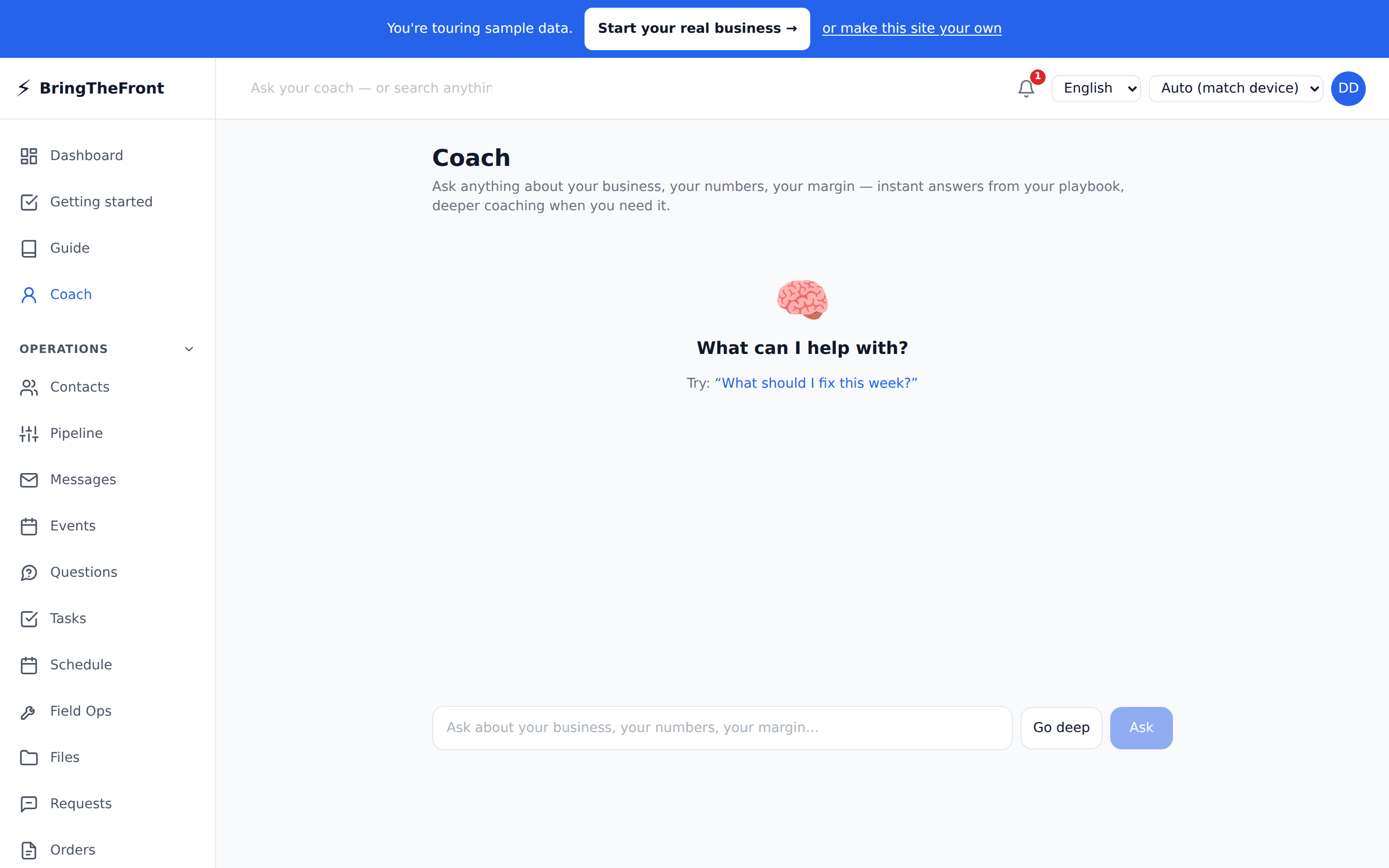
The business coach
Reads what actually happened in your business and tells you what changed and what to do about it. Most owners never get this because nobody has time to build the report.
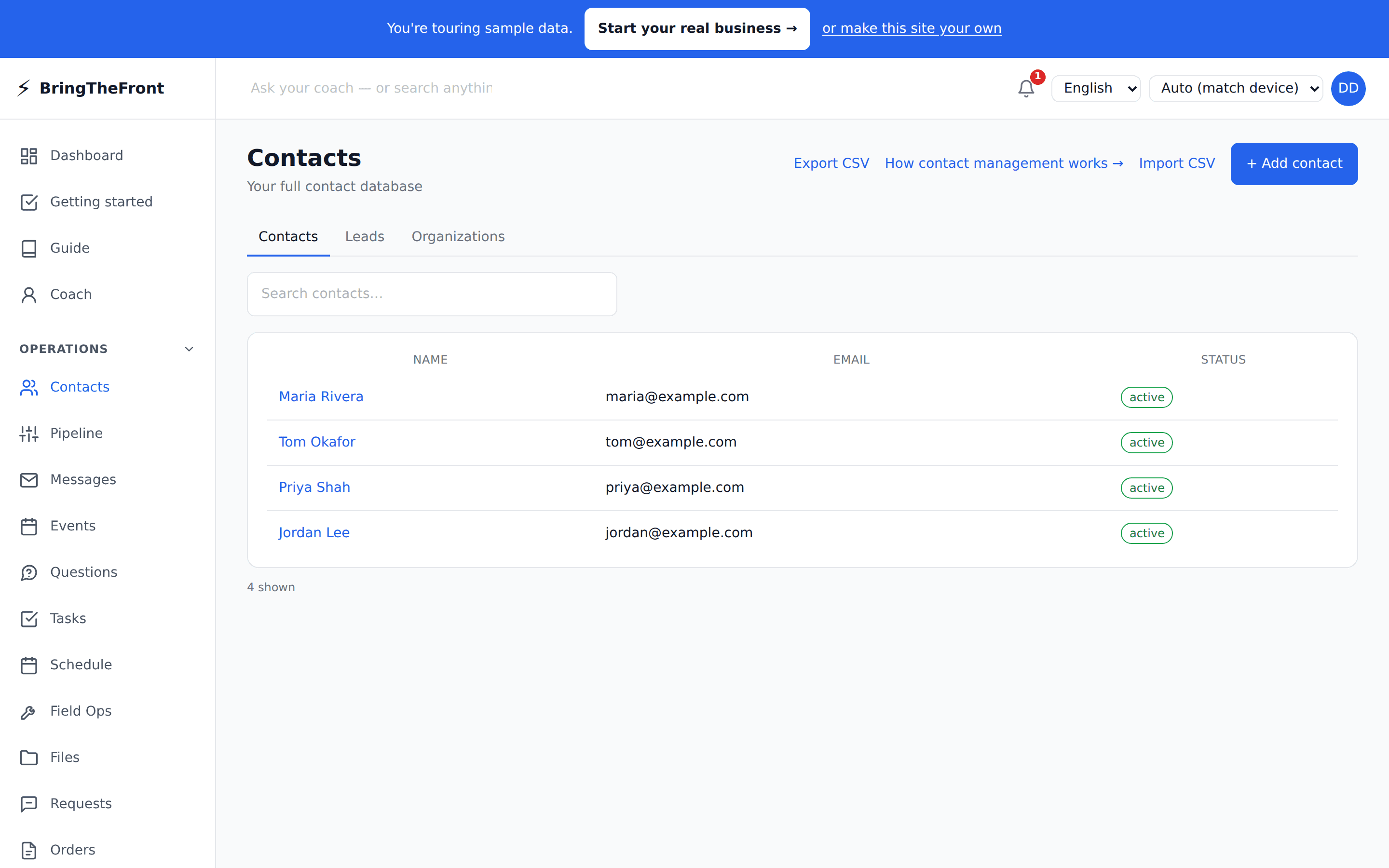
Contacts and history
Every customer with the whole story attached — quotes, jobs, messages, payments. No more "let me call the office and find out".
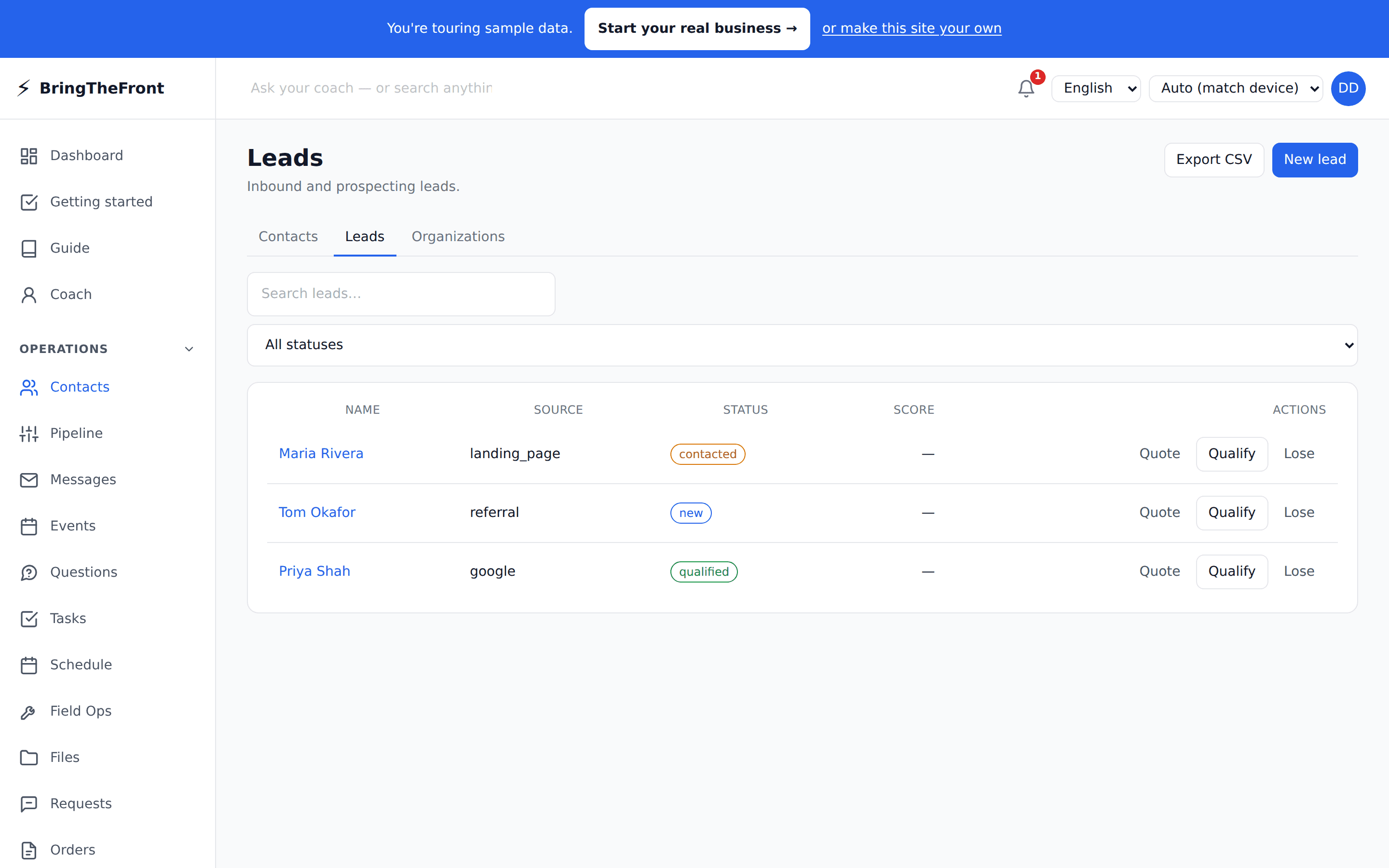
The pipeline
Demand that has not become revenue yet, in stages you name yourself. Follow-up runs on triggers rather than on somebody remembering.
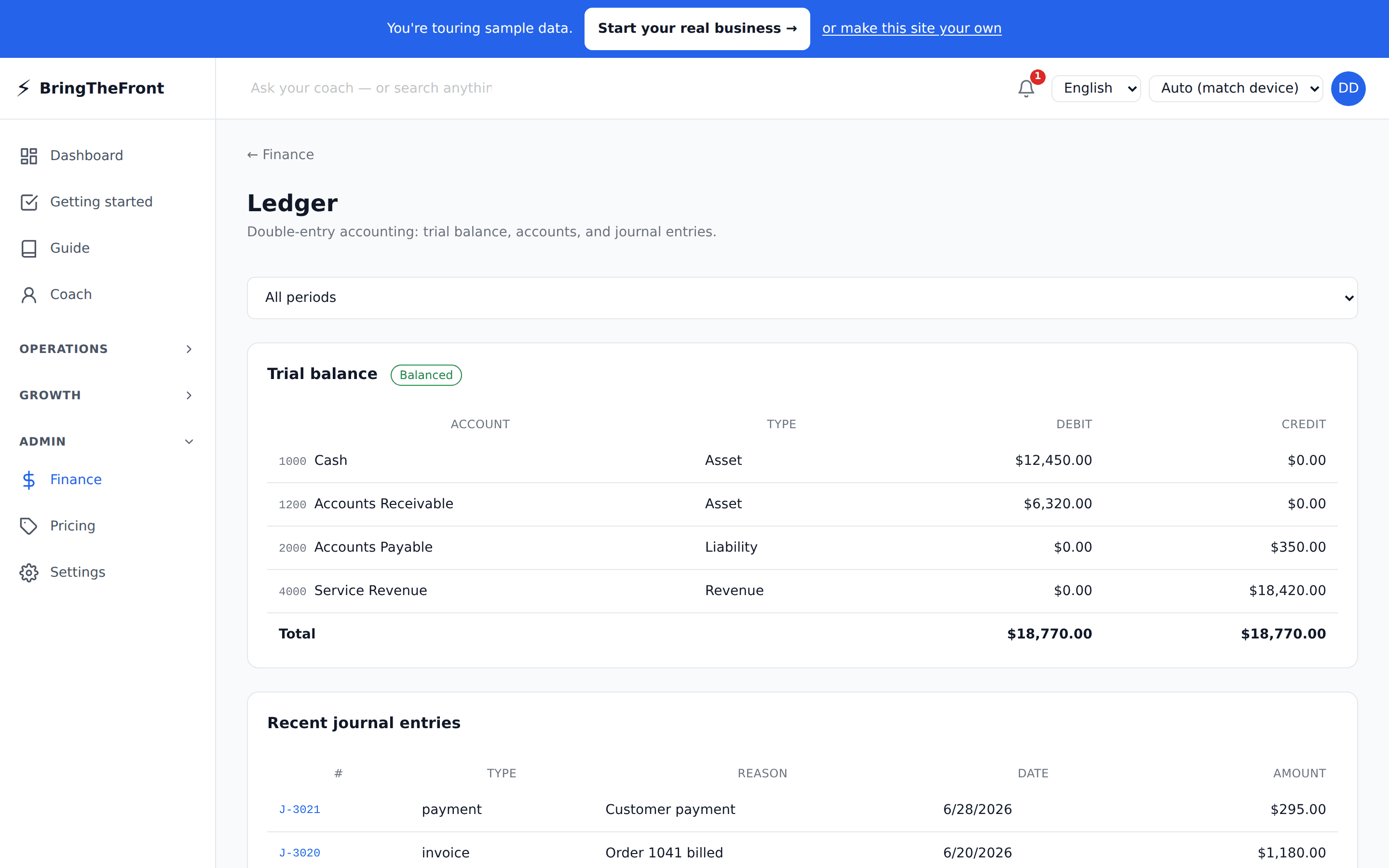
Real books, not a payments list
Double-entry accounting behind every payment, export-ready for an accountant. This is the part people assume they will bolt on later and then cannot.
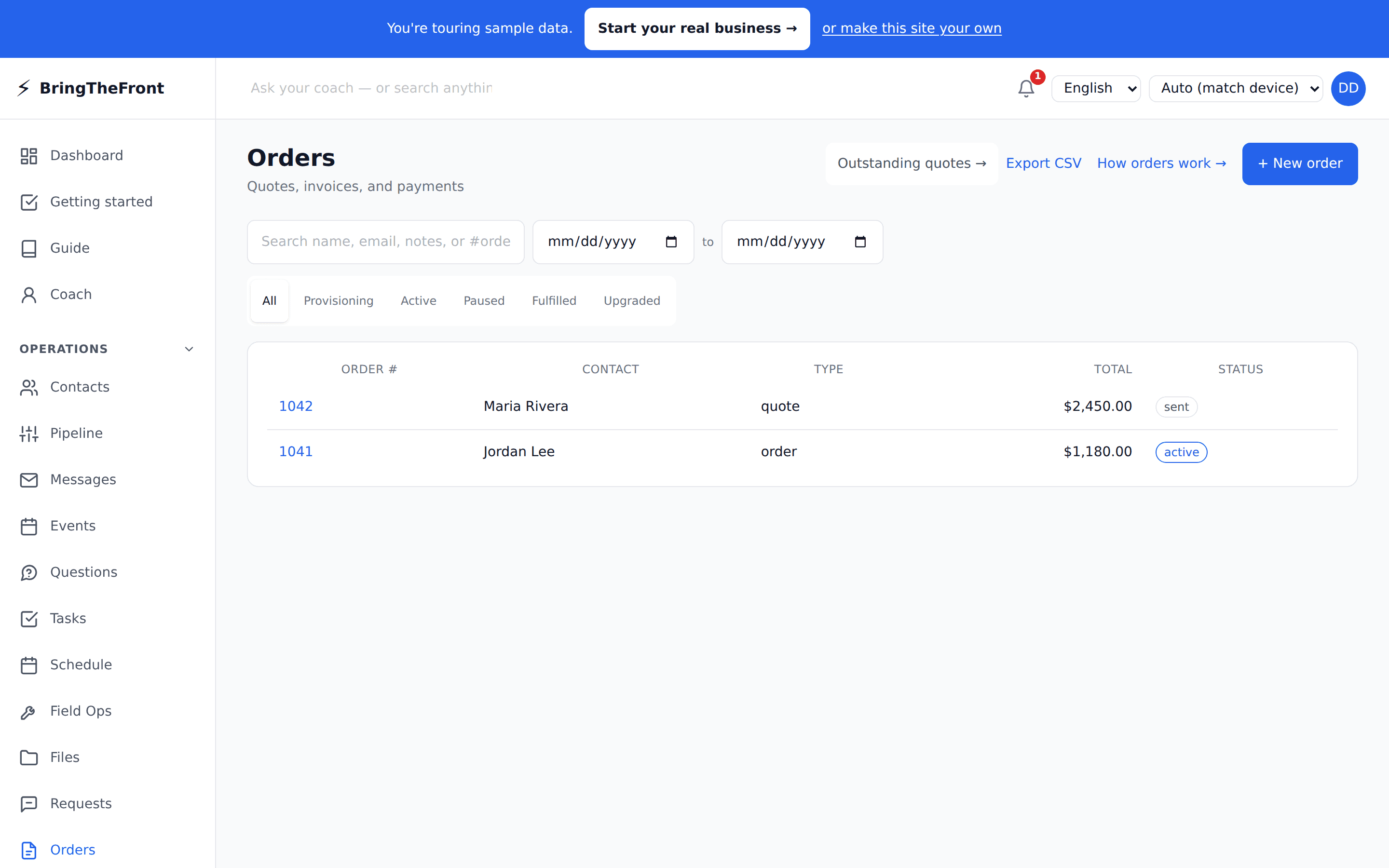
Quotes, orders and invoices
Priced from your own rules, converted to invoices, paid through your own Stripe — one object from proposal to settled money.
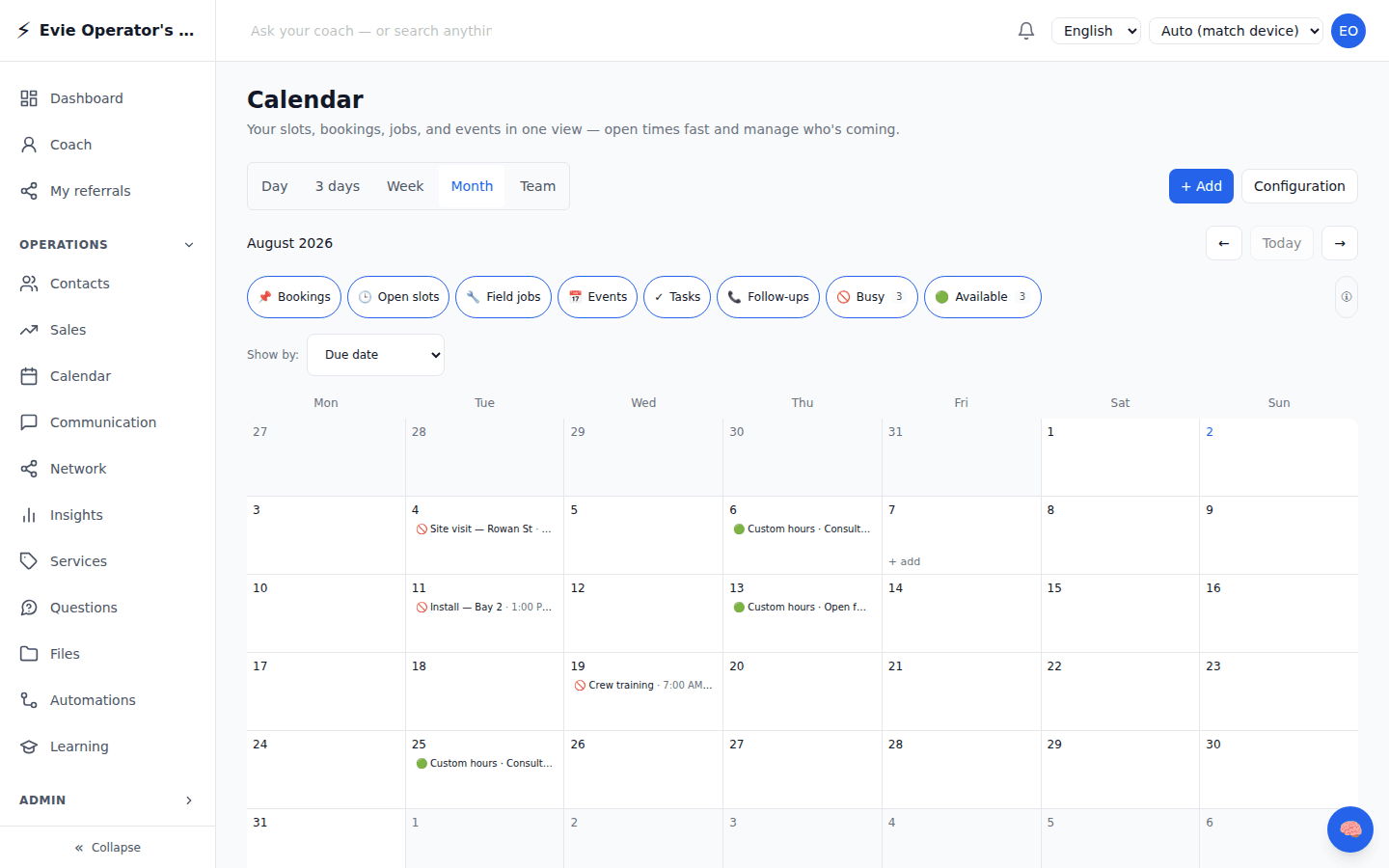
The schedule, all of it
Bookings, open slots, field jobs, tasks, follow-ups and blocked time on one grid — day, week, month, or the whole team. In most stacks these live in four products that cannot see each other, which is why the schedule is never right in any of them.
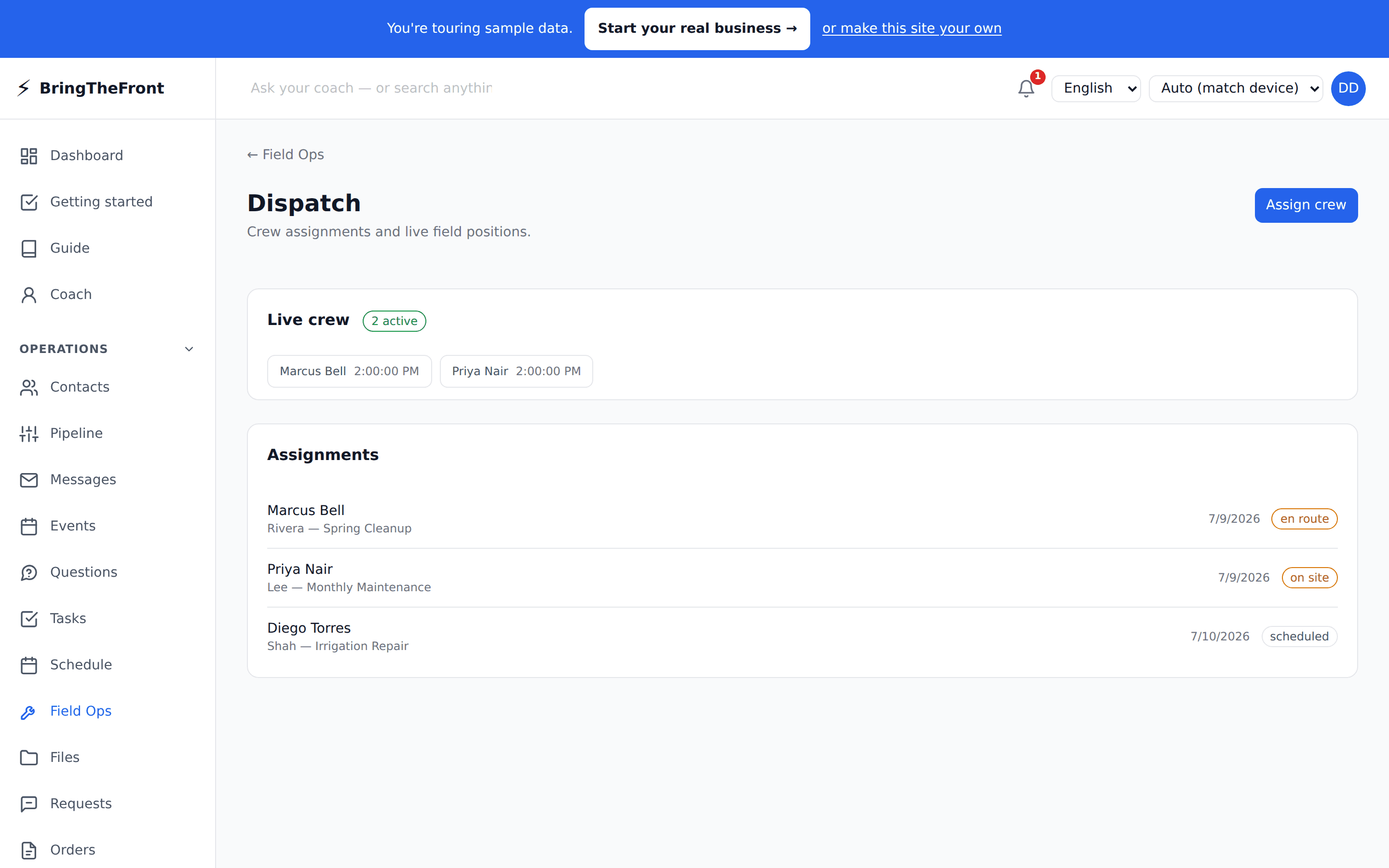
Dispatch and the field
The whole day on one board, crews assigned, and job cards the person on site can actually use. Completion flows straight back into invoicing.
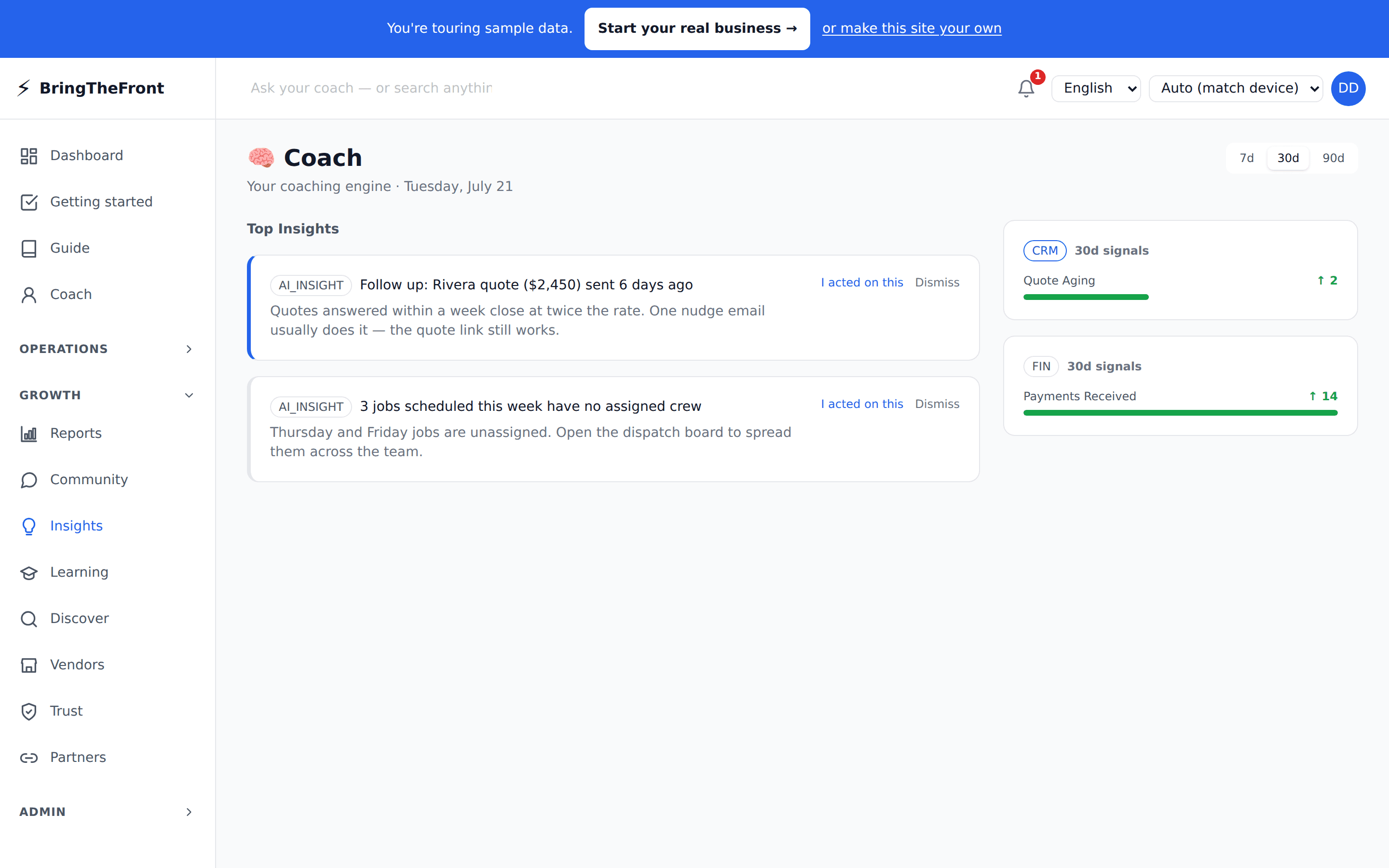
Insight, not just reporting
The difference between a number and knowing what to do about it. Reporting tells you revenue fell; this tells you which part of the business moved and what usually follows.
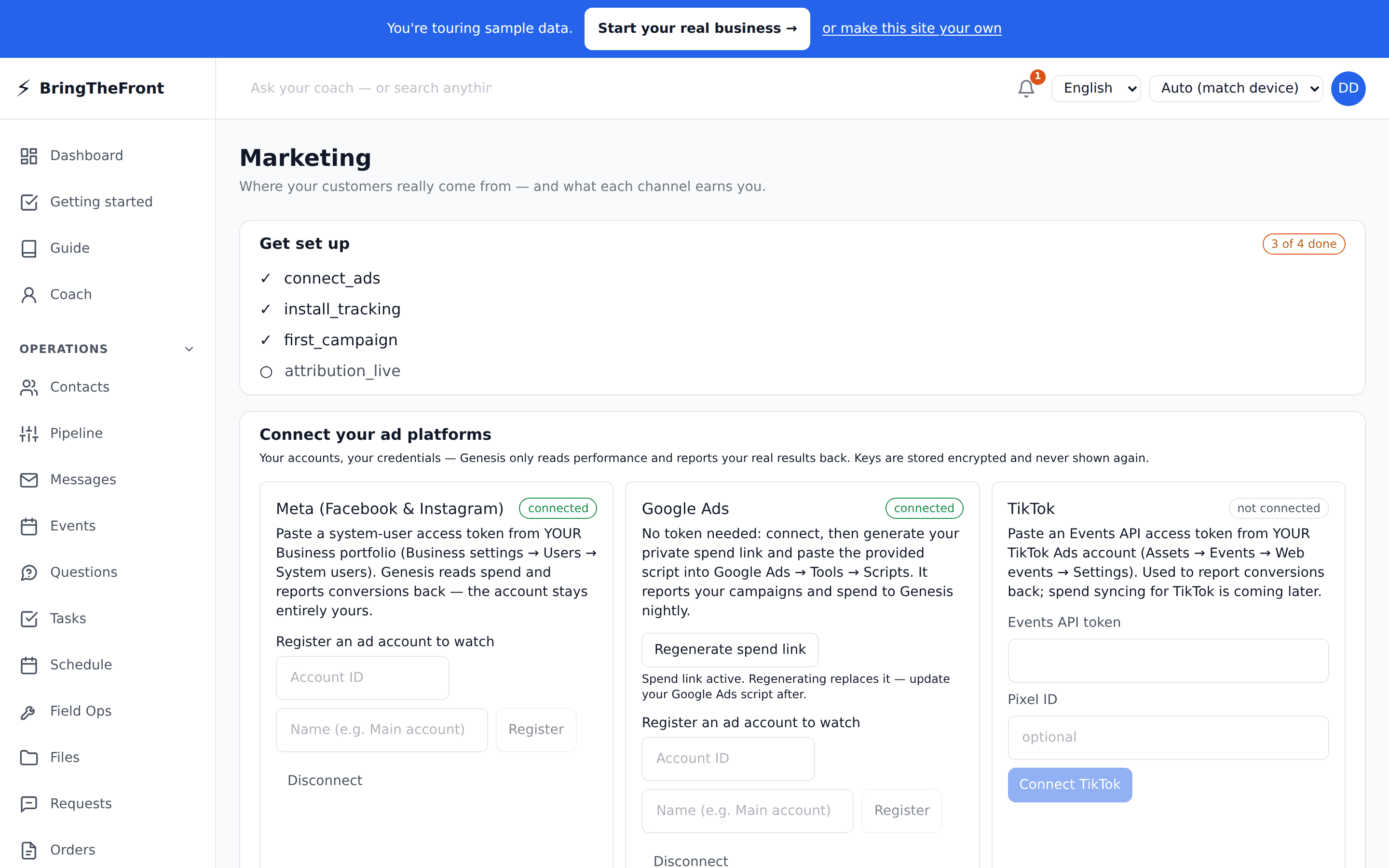
Marketing and attribution
Campaigns, consent handled properly, and results credited against money actually collected rather than what a pixel believes.
Common questions
What does the admin side of this platform actually look like?
A daily dashboard, an AI business coach, contacts with full customer history, a named-stage lead pipeline, real double-entry books, quotes and invoices paid through your own Stripe, a dispatch board with mobile job cards, events and ticketing, and marketing with attribution. It ships with the website rather than being a separate purchase.
Is the operator dashboard included or is it an add-on?
Included. The dashboard your team works in every day ships with the site. Most website projects budget for the public pages and discover the business software they actually needed about six weeks later.
All of it, with your front end on top
These screens are yours to reconfigure — which modules appear, what they are called, the views and filters your team works in. And the public site in front of them is code you own and can change as fast as you can describe it.